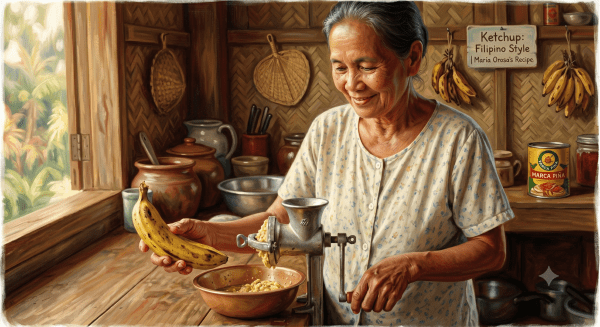
Walk into any Filipino kitchen, and you will inevitably find a bright red bottle sitting on the table. To the uninitiated visitor from the United States, it looks like standard tomato ketchup. But one taste—a unique balance of sweet, tangy, and savory—reveals that this is something entirely different. This is banana ketchup.
While it is now a beloved staple of Filipino cuisine, the story of this condiment is not a lighthearted one. It is a story of scientific brilliance and quiet heroism born during the dark years of World War II.
A Genius in the Lab
The invention of banana ketchup is the legacy of María Orosa, a brilliant food chemist born in Taal, Batangas, in 1892. After earning degrees in pharmaceutical and food chemistry at the University of Washington in the United States, Orosa was offered a prestigious, lucrative position as an assistant chemist with the Washington state government.
In an era of systemic prejudice against women and immigrants, her success was remarkable. Yet, she chose to walk away from that comfort. Believing her knowledge belonged to her home, she returned to the Philippines to lead the plant utilization division at the Bureau of Plant Industry.
Invention Out of Need
In the 1920s and 30s, the Philippines relied heavily on imported canned goods, even though the islands were rich with agricultural resources. Orosa set out to change this, developing over 700 recipes and preservation methods to promote self-reliance.
The creation of banana ketchup was born of this desire to utilize local ingredients. With tomatoes scarce and expensive, Orosa experimented with the abundant banana crops. She created a sauce that was not only shelf-stable but also suited the Filipino palate, which inherently favors sweeter profiles.
A Weapon of Resistance
When the Japanese invaded the Philippines in 1941, Orosa’s scientific work took on a life-saving urgency. She joined Marking’s Guerrillas, a local resistance group, holding the rank of captain.
While others fought with rifles, Orosa fought with science. Working under the radar, she organized a system to smuggle her nutrient-rich inventions—such as Darak (vitamin-rich cookies made from rice bran) and Soyalac (a protein-rich soybean preparation)—into internment camps at the University of Santo Tomas. Hidden inside hollowed-out bamboo tubes, these “miracle foods” kept thousands of prisoners of war and civilians from dying of starvation and beriberi.
Tragically, Orosa was killed by shrapnel during the Battle of Manila in February 1945. She did not seek the spotlight, but her work—including the humble banana ketchup—remains a lasting testament to her practical, quiet dedication to her people.
More Than a Condiment
Today, banana ketchup is a flavor identity. It is an essential partner to fried chicken, the secret behind the unique sweetness of Filipino-style spaghetti, and a common dipping sauce for everything from omelets to hotdogs. It stands as a reminder that the most ordinary things in our lives often hold the most extraordinary histories.
What’s Next?
We have only just begun to scratch the surface of the Filipino table. In future articles, we will explore:
- The Sacadas of Sugarlandia: A look at the migrant workers of Negros and the grueling history behind the sugar that sweetens our daily lives.
- The Working-Class Jeepney: How a generation of Filipinos turned abandoned WWII military jeeps into the backbone of the nation’s public transport.
- The Fisherfolk of Manila Bay: A profile on the families who have relied on the bay for generations and their resilience in the face of changing tides.
 Tom & Nancy Cook