May 14, 2026
It has been an eventful week here in the Philippines, marked by severe weather, significant political shifts in the capital, and ongoing economic transitions locally in the Subic Bay region. For those of us living and working in Central Luzon, the contrast between the high-stakes news out of Manila and our daily realities is sharp, though both impact our communities.
The National Picture: A Divided Capital
The most pressing national news centers on a severe political fracture in Manila. A standoff is currently underway at the Senate involving Senator Ronald “Bato” dela Rosa. Following an unsealed warrant from the International Criminal Court related to his time as national police chief, authorities attempted an arrest that resulted in gunfire within the Senate complex. Fortunately, there were no injuries, and the Senate was placed under lockdown. Senator dela Rosa remains inside the building under the protective custody of allied senators, refusing to surrender to international authorities. President Marcos has publicly denied that state security forces were involved in the gunfire or the arrest order.
In a concurrent development that underscores the growing divide between the current administration and the Duterte faction, the House of Representatives has formally transmitted Articles of Impeachment against Vice President Sara Duterte to the Senate. This initiates the next constitutional phase for a formal trial.
On a more practical level, the public is feeling the strain of global events. Middle East tensions have driven up local fuel prices, prompting transport strikes. To help offset the burden on daily commuters, the government has temporarily halved train fares in the metro areas.
Local Realities: Olongapo, Subic Bay, and Zambales
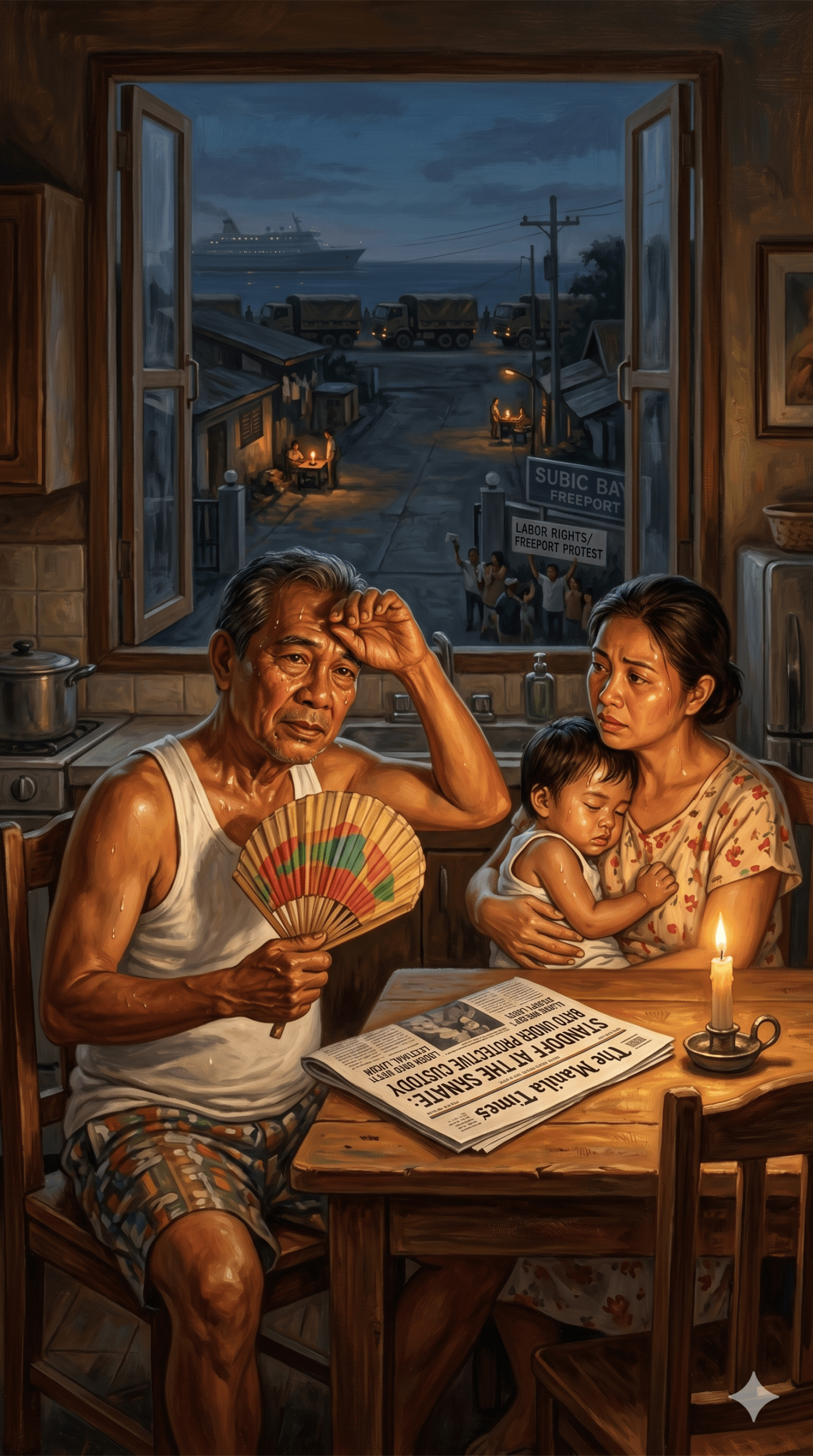
Closer to home, the most immediate issues are the weather and the infrastructure struggling to keep up with it. The state weather bureau continues to place Olongapo—particularly around Cubi Point and Subic Bay—under a “danger” level heat index warning, with temperatures feeling like 43°C (109°F). It is a persistent, draining heat that requires serious attention to hydration and limiting afternoon outdoor work.
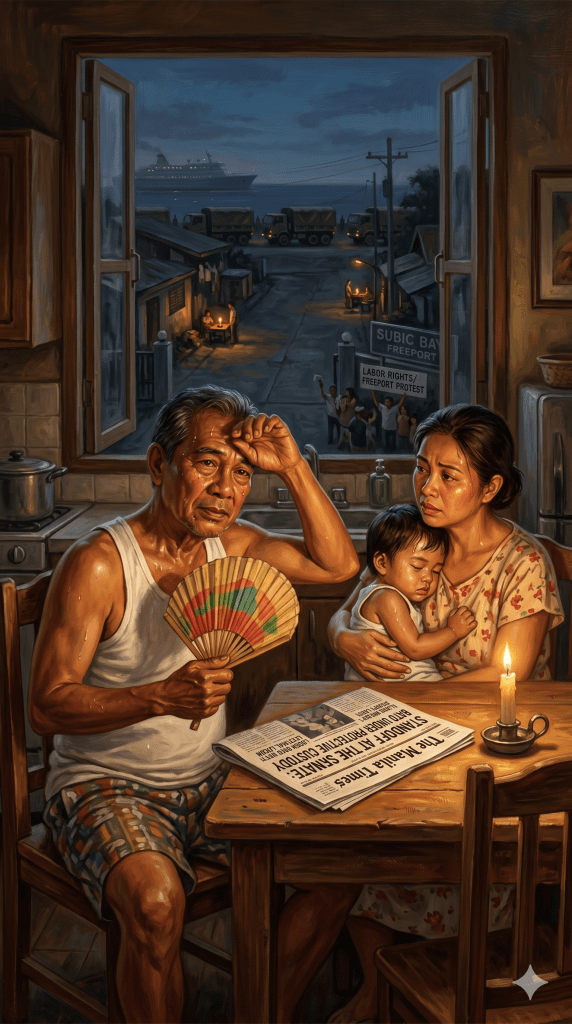
The strain of this heat wave culminated last night when the Luzon Power Grid was placed under a “Red Alert” by the National Grid Corporation of the Philippines (NGCP). Several power plants went offline just as demand peaked, forcing manual load dropping across the island. Here in Olongapo, the power cut out around 7:00 PM and did not return until after 9:00 PM. Losing light, fans, and air-conditioning just as families were settling in after a grueling, hot day was difficult, highlighting the fragility of our local infrastructure under pressure.
In the Freeport Zone, the tempo remains high. The massive US-Philippine Balikatan military exercises concluded last week, heavily utilizing Subic Bay for logistics. While the exercises are over, they did prompt local labor protests outside the Freeport gates, with groups raising concerns over both the geopolitical implications and the local cost of living.
Looking forward, there are significant economic projects in motion. The US, Japan, and the Philippines have announced an expansion of the Luzon Economic Corridor to include other partner nations. This initiative aims to improve infrastructure and supply chains connecting Subic Bay, Clark, Manila, and Batangas. Additionally, the Subic Bay Metropolitan Authority (SBMA) is pushing ahead with the development of the Subic Bay International Airport, setting a mid-August deadline for proposals.
Around the wider Zambales area, community and regulatory actions continue as usual. SM City Olongapo Central recently ran a large-scale joint tactical inspection of its emergency protocols. On the environmental front, the Department of Environment and Natural Resources halted a mining exploration project in the province for violating environmental orders, while community groups up in Masinloc have been steadily working to rehabilitate degraded mangrove areas.
We will continue to monitor these situations as they develop, keeping an eye on how broader national shifts and the ongoing struggles with our local power grid affect our daily lives and our work here in the province.
 Tom & Nancy Cook
Leave a comment