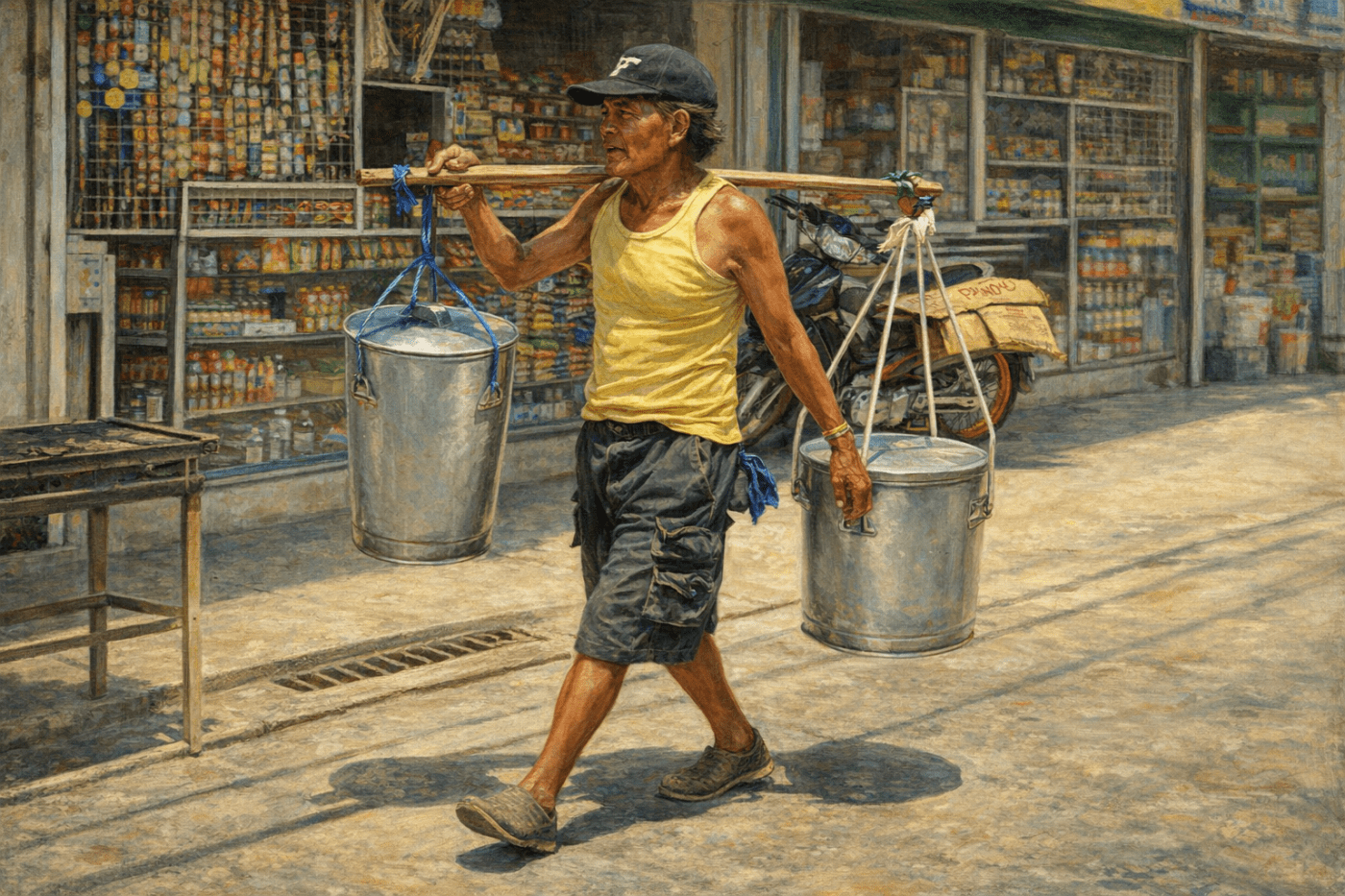
If you walk through a Filipino neighborhood early in the morning, you will hear a familiar call echoing through the streets: “Tahooooo!” It is the sound of a magtataho — a traditional vendor — carrying two stainless pails on a wooden yoke across his shoulders. Inside those pails is one of the most beloved comfort foods in the Philippines: taho.
For many Filipinos, taho is more than a snack. It is a symbol of childhood, community, and the simple joys of everyday life. For our ministry among Filipinos and Aetas, it is also a reminder of how God meets people in ordinary places — in streets, homes, and shared moments of kindness.
What Exactly Is Taho?
Taho is a warm, sweet, soft drink made from three simple ingredients:
- Silken tofu
– soft, warm, and freshly scooped - Arnibal
– a syrup made from brown sugar and sometimes vanilla - Sago pearls
– small, chewy starch balls similar to tapioca
The vendor mixes these ingredients right in front of you, creating a comforting cup that is both nourishing and nostalgic.
A Tradition That Goes Back Generations
Taho has deep roots in Filipino culture. Its origins trace back to Chinese influence, especially the tradition of warm soy pudding. Over time, Filipinos made it their own — adding brown sugar syrup, sago pearls, and the unique way of selling it.
The Magtataho: A Cultural Icon
The magtataho is instantly recognizable:
- A wooden yoke balanced across the shoulders
- Two stainless steel pails — one for tofu, one for syrup and sago
- A loud, friendly call that wakes up the neighborhood
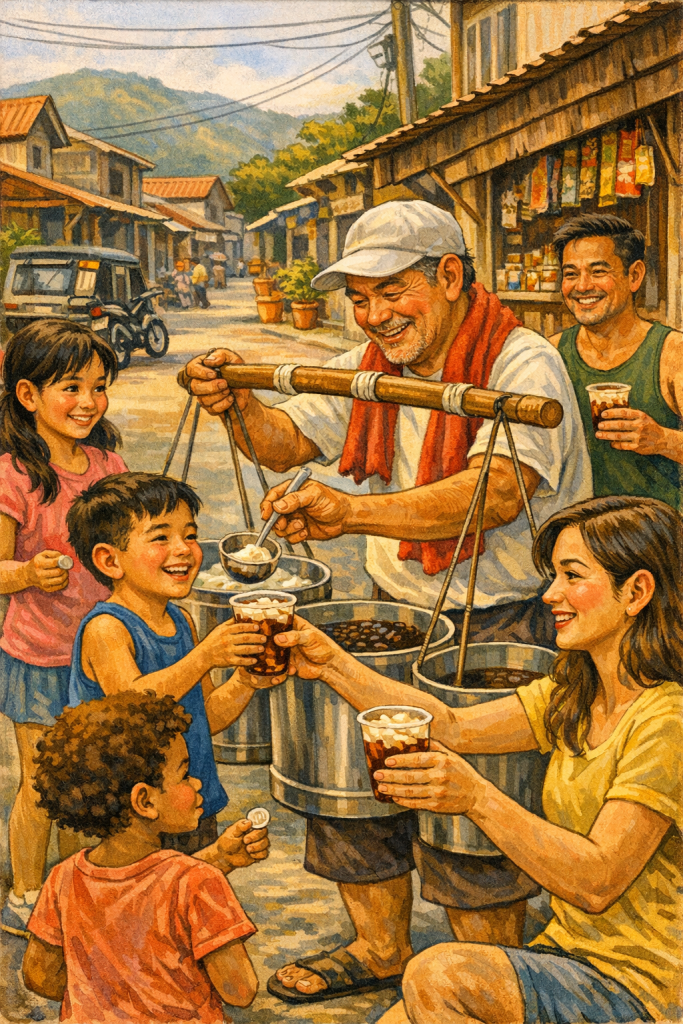
Children run out of their homes with coins in hand. Parents buy cups for their kids. Workers grab a quick breakfast before heading to their jobs. In many communities, the taho vendor is a daily visitor — almost like a neighbor.
This simple ritual shows something beautiful about Filipino life: community happens in small, shared moments.
Taho in Filipino Daily Life
Taho is usually sold in the early morning, when the air is cool and the streets are quiet. It is part of the rhythm of Filipino mornings — like the smell of rice cooking or the sound of roosters crowing.
For many Filipinos living abroad, taho is one of the foods they miss the most. It reminds them of home, family, and childhood.
For Aeta communities, taho vendors are also a familiar sight in towns and markets. The drink is affordable, filling, and easy to enjoy — a small treat that brings joy to children and adults alike.
Nutritional Value: Simple but Nourishing
Taho is not just comforting — it also has real nutritional benefits.
1. Silken Tofu (the main ingredient)
- Good source of plant protein
- Contains calcium, iron, and potassium
- Gentle on the stomach
- Heart‑friendly soy isoflavones
2. Arnibal (brown sugar syrup)
- Provides quick energy
- Can be reduced for those watching sugar intake
3. Sago Pearls
- Adds carbohydrates for energy
- Light and easy to digest
Compared to many street foods, taho is actually one of the healthier Filipino snacks — warm, soft, and nourishing.
Why Taho Matters for Our Ministry
When we serve in Filipino and Aeta communities, we are not only sharing the Gospel — we are entering into the daily life of the people. Understanding simple traditions like taho helps us:
- Build relationships
- Appreciate local culture
- Connect with families in familiar ways
- Show respect for the rhythms of Filipino life
Jesus often met people in ordinary places — at wells, in homes, on the road. In the same way, ministry in the Philippines often begins with simple conversations, shared food, and everyday kindness.
Sometimes, a cup of taho opens the door to a deeper friendship.
A Taste of the Philippines for American Readers
If you have never tried taho, imagine:
- The warmth of fresh tofu
- The sweetness of brown sugar
- The soft chew of sago
- The joy of hearing a vendor call out in the morning
It is a small picture of Filipino hospitality — simple, warm, and full of heart.
And for us, it is also a reminder that God is present in the ordinary moments of life. He works through shared food, shared stories, and shared community.
Closing Reflection
Taho may be a humble street drink, but it carries the story of a people — their mornings, their memories, their neighborhoods, and their way of life. As we continue our Christian work among Filipinos and Aetas, we celebrate these traditions because they help us understand the hearts of the people we serve.
Sometimes, ministry begins with something as simple as a warm cup of taho.
 Tom & Nancy Cook
Leave a comment